



Preguntas frecuentes

1. ¿Qué es Safe2Tell?
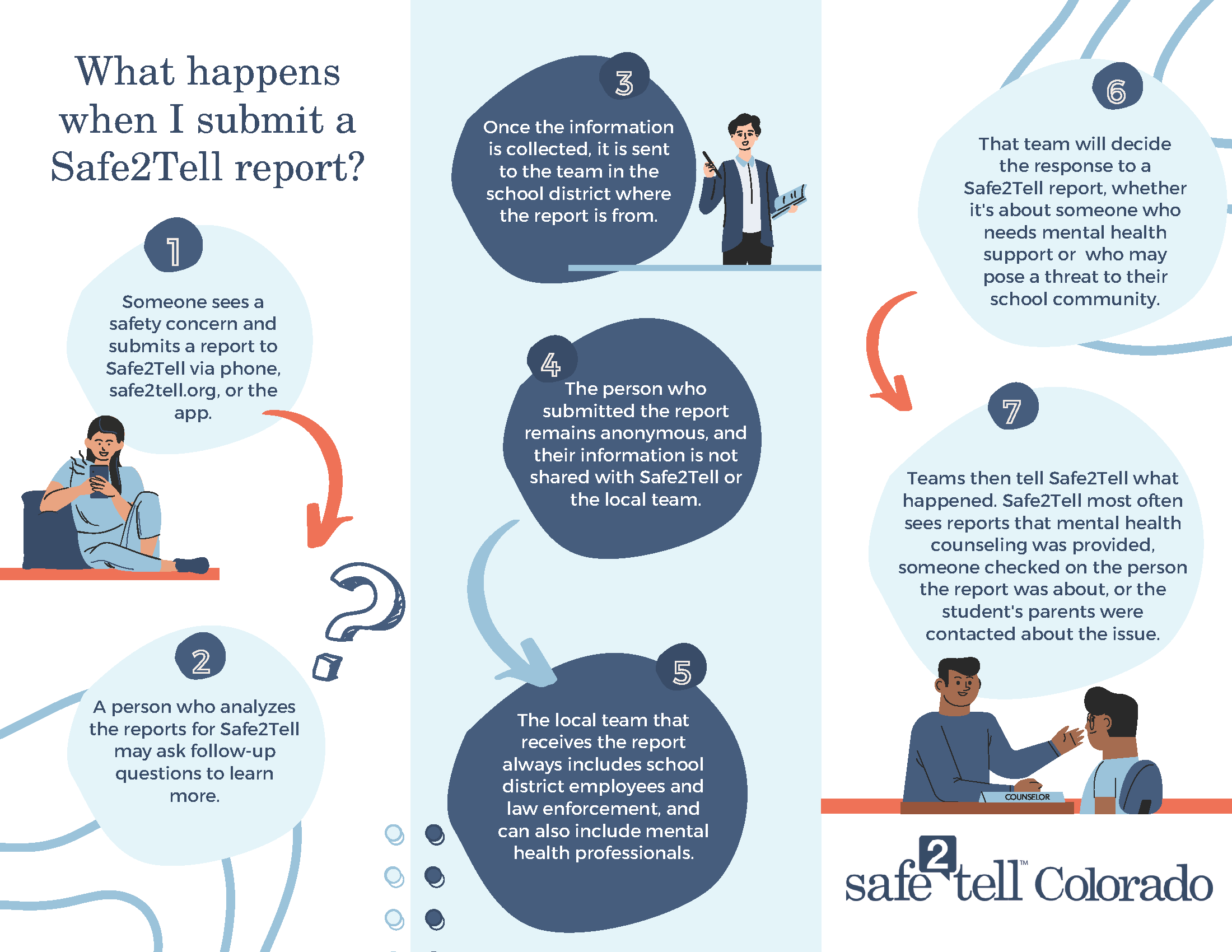
Safe2Tell les brinda a estudiantes, padres y miembros de la comunidad una forma segura y anónima de reportar cualquier amenaza a su seguridad o a la seguridad de otra persona. Safe2Tell es un modelo reconocido y replicado a nivel nacional para la denuncia anónima.
2. ¿Cómo funciona Safe2Tell?
Cualquier persona que tenga información sobre una situación potencialmente peligrosa puede llamar al número gratuito a nivel estatal al 877-542-7233, haz un informe web haciendo clic en el botón "Crear informe" en la parte superior y lateral de la página, descargando la aplicación móvil y creando un informe desde un smartphone, o enviando un mensaje de texto a S2TCO al 738477.
Un analista capacitado de Safe2Tell luego reenviará la información a equipos locales compuestos por escuelas, fuerzas del orden, salud mental y/o otros socios. Los socios locales tienen plena autoridad sobre la respuesta y los resultados del informe. Hacer un informe
3. ¿Cuándo puedo hacer un reporte a Safe2Tell?
Puedes llamarnos o hacer un reporte web en cualquier momento, cualquier día. Hacer un reporte de Safe2Tell es siempre gratis.
4. ¿Qué puedo reportar a Safe2Tell?
Puedes reportar cualquier cosa relacionada con la seguridad y salud mental escolar y juvenil donde tu deseo sea proteger, prevenir o ayudar. Si no es un asunto de Safe2Tell, te referiremos al recurso apropiado si es necesario.
5. ¿Cómo permanezco anónimo?
Su anonimato está protegido por la ley de Colorado (C.R.S. Sección 24-31-601 y siguientes). Safe2Tell no le pedirá información que lo identifique. Safe2Tell le pedirá información sobre la situación que le preocupa.Nota: Las llamadas a nuestra línea administrativa, correos electrónicos y publicaciones en redes sociales no están protegidas por la ley Safe2Tell y no se procesan como reportes anónimos.Ver estatuto
6. ¿Qué hay de las circunstancias extremas? ¿Se protege la identidad del informante en esos casos?
Nuestra misión es romper el código de silencio a través del anonimato de quienes reportan. Por ley, Safe2Tell está obligado a proteger el anonimato de quienes reportan, a menos que se determine que se ha presentado un reporte falso a través de Safe2Tell con la intención de lastimar, acosar o intimidar a otra persona. El proyecto de ley del Senado 21-081 describe las situaciones específicas en las que un tribunal o el Fiscal General pueden ordenar al programa que revele dicha información. Los casos de denuncias falsas son poco frecuentes y representan aproximadamente el 2% de las denuncias recibidas por Safe2Tell. Safe2Tell siempre acoge con agrado las denuncias presentadas a través del programa con la intención de prevenir, proteger o ayudar.Ver Proyecto de Ley del Senado 21-081
7. ¿Es reportar a Safe2Tell lo mismo que ser un soplón?
Creemos que una comunidad sana se preocupa por los demás. Reportar a Safe2Tell no es chivarse, es abogar. Un “soplón” es alguien que quiere herir, acosar, vengarse o meter a alguien en problemas. Un defensor es alguien que se pone de pie y habla por otros que pueden estar pasando por dificultades. Pregúntate: “¿Se trata de mí o de alguien más?”. Chismear o chivarse implica el acto intencional de intentar meter a alguien en problemas. Contar o reportar implica compartir tu preocupación para ayudar a alguien que está luchando, herido, o que puede hacerse daño a sí mismo o a otros.
8. ¿Cuál es la diferencia entre Safe2Tell, 988 y 911?
Safe2Tell vs. Línea de Salud Mental 988 de Colorado. Safe2Tell proporciona la información de contacto de 988 Colorado con cada envío de reporte si desea hablar con alguien para recibir consejería. Puede comunicarse directamente con 988 Colorado en cualquier momento llamando al 988 o enviando un mensaje de texto al 988. Aprende más en la Línea de Salud Mental de Colorado 988
Safe2Tell vs. 911. Si te preocupa que algo malo pueda suceder, usa Safe2Tell. Si la situación es una emergencia, marca 911.